
Washington’s Precious Metals Tax: A Perfect Case Study in How to Chase Investors and Small Businesses Out of Your State
KIRKLAND, WA — If the goal was to discourage precious-metals investing in Washington State, lawmakers absolutely nailed it.
As of January 1, 2026, Washington eliminated a precious-metals sales-tax exemption that had existed for roughly 40 years, meaning investors now pay retail sales tax—often close to 10% depending on location—when purchasing gold or silver bullion.
Because apparently someone in Olympia looked at an investment asset traded globally and thought, “You know what this needs? A retail tax.”
Dealers must also pay Business & Occupation (B&O) tax on bullion sales, meaning the state effectively taxes both sides of the transaction: the investor buying the metal and the dealer selling it.
Brilliant.
For investors, the math is simple.
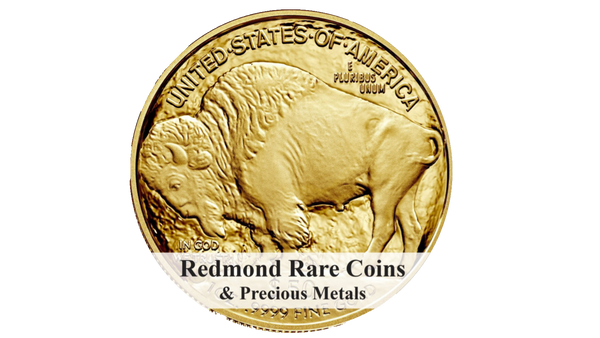
A $5,200 gold coin purchased in Washington can now cost roughly $5,720 after tax.
The exact same coin purchased in Oregon—a few hours south—costs $5,200.
No tax.
No penalty for investing.
No rocket science required to figure out where people will buy. And yet somehow the state expects this policy to increase revenue.
Investors Are Already Voting With Their Feet
Precious metals are not refrigerators or furniture. They’re global investment assets.
Buyers can purchase them:
- online
- from out-of-state dealers
- across the border in Oregon
- through commodity markets or ETFs
So when Washington added a 10% penalty for buying locally, investors did the obvious thing. They started buying somewhere else.
The Research Was Already There
What makes this policy even more remarkable is that the outcome was completely predictable. Industry research has repeatedly shown that taxing precious metals reduces in-state business activity. A study referenced in legislative testimony found that coin dealers in states without bullion sales tax exemptions recorded 926% higher in-state retail sales compared with dealers in states that taxed precious metals.
Not nine percent. Not ninety percent. Nine hundred and twenty-six percent!
The same analysis showed total dealer business activity in states with bullion exemptions was 335% higher than in states that taxed precious metals.
In other words:
Tax bullion → business disappears.
Remove the tax → business explodes.
This is not a controversial theory. It’s basic economics. Something Olympia doesn’t seem to understand, I mean they are in debt $2 billion dollars yet keep spending like they have a backup plan. Oh, they do…tax the people to cover their own screwups.
Efforts to Fix the Problem Went Nowhere Washington coin dealers didn’t just complain about the tax. They organized.
Industry advocates helped establish the Washington Coin & Bullion Association, working with lawmakers to introduce two bills that would restore the bullion sales-tax exemption.
And then something incredible happened. Nothing. The bills were never even brought up for a hearing. Not debated. Not discussed. Not even acknowledged. They were filed and quietly left to die on legislators’ desks. Apparently protecting a small but legitimate investment industry wasn’t worth the five minutes it would take to hold a hearing. Coin shops and their customers will remember this when legislators are kissing their asses around re-election time for sure!
Why the State Probably Won’t Fix It Anytime Soon
Let’s be honest about the bigger picture. Washington has major budget problem and a government that increasingly relies on new taxes to close the gap. I mean lets be honest here…if you or I tried running our business like the state does…we’d have to file bankruptcy. So when officials see a niche industry that isn’t politically powerful enough to fight back, the temptation is obvious.
Tax it. Whether the policy actually works economically is apparently a secondary concern.
What This Means for Investors in Washington
If you live in Washington and want to invest in precious metals, the reality is simple.
You now have three choices:
1. Pay the tax.
Buy locally and pay roughly 10% more than investors in neighboring states.
2. Buy outside Washington.
Drive to Oregon or order from out-of-state dealers.
3. Skip physical metals entirely.
Some investors will shift into ETFs or commodity markets instead. None of these outcomes increase economic activity in Washington. But they do make it easier for investors to spend their money somewhere else.
The Bottom Line
Washington didn’t just tax precious metals. It effectively created a 10% penalty for investing locally.
History—and common sense—suggest what happens next:
- investors leave
- local sales decline
- small businesses adapt or close
- and tax revenue falls far short of projections
But at least policymakers can say they “closed a loophole.”
Meanwhile, coin dealers across Washington will continue doing what small businesses have always done when government policy gets in the way:
Adapt.
Redmond Rare Coins in Kirkland, WA 425-823-2646
Serving collectors and investors across the Pacific Northwest since 1995.
And yes — if you’re selling gold or silver, that part is still tax-free.