

Redmond Rare Coins
Byzantine Empire – Theophilus Æ Follis (AD 829–842)
Byzantine Empire – Theophilus Æ Follis (AD 829–842)
Couldn't load pickup availability
Byzantine Empire – Theophilus Æ Follis (AD 829–842)
Syracuse Mint, Sicily | Extremely Fine (XF)
A Remarkable 1,180-Year-Old Byzantine Coin
Offered by Redmond Rare Coins & Precious Metals is an exceptionally attractive bronze follis issued under Byzantine Emperor Theophilus (AD 829–842), struck at the historic imperial mint of Syracuse, Sicily.
This fascinating coin features a bold frontal portrait of Theophilus wearing an elaborate imperial crown and intricately patterned ceremonial loros. The reverse displays two additional imperial portraits, traditionally identified as Michael II and Constantine, representing the ruling Amorian dynasty.
The obverse is particularly impressive, retaining well-defined facial features, a prominent crown, and striking geometric detail throughout the emperor’s ceremonial clothing.
Coin Specifications
- Empire: Byzantine Empire
- Emperor: Theophilus (AD 829–842)
- Denomination: Æ Follis (Bronze)
- Mint: Syracuse, Sicily
- Date: AD 829–842
- Grade: Extremely Fine (XF), dealer estimated
- Catalog Reference: Sear Byzantine 1680 (provisional)
- Finish: Naturally aged dark brown-to-black patina
- Certification: Uncertified (raw)
- Diameter: 17.3mm
- Weight: 3.4g
- XRF: Ag .191, Fe .196, Cu 99.12
Obverse – Emperor Theophilus
The obverse features a facing bust of Emperor Theophilus, crowned and wearing the elaborate ceremonial loros associated with Byzantine imperial authority.
The emperor holds a patriarchal cross, symbolizing the connection between imperial power and Christianity.
This specimen exhibits especially attractive obverse detail, including clearly defined eyes, nose, mouth, crown, and individual geometric elements of the loros.
Reverse – The Imperial Dynasty
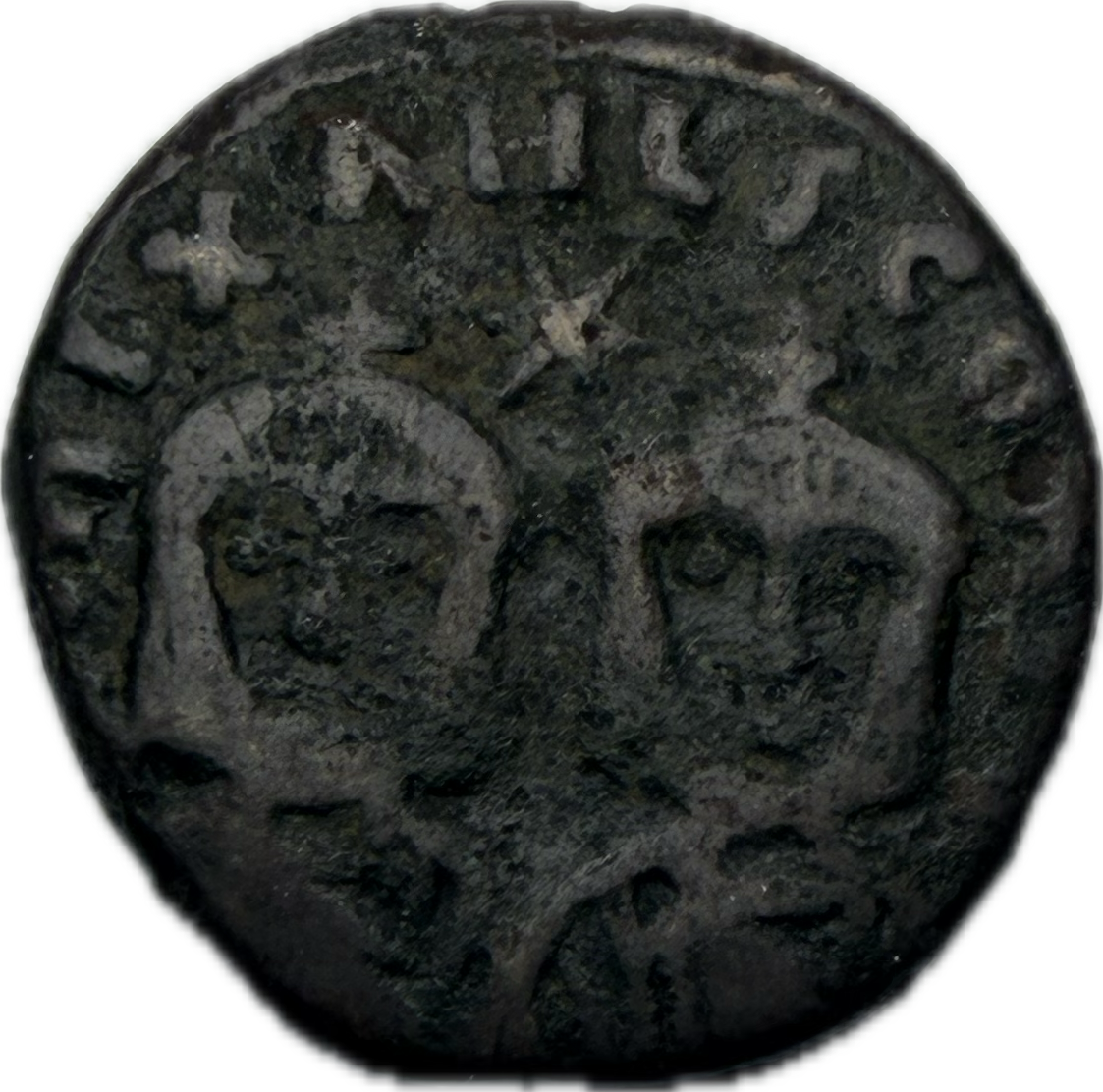
The reverse depicts two crowned imperial figures, identified with Michael II and Constantine, with a star positioned between their heads.
The inscription identifies the imperial figures and reinforces the dynastic message of the coinage.
Although the reverse is more softly struck than the obverse, both portraits remain recognizable, and the central star and portions of the surrounding inscription are visible.
Historical Background
Theophilus ruled the Byzantine Empire from AD 829 until his death in 842. A member of the Amorian dynasty, he governed during a period of military conflict, cultural development, and religious controversy.
His reign was marked by the final decades of Byzantine Iconoclasm, the imperial policy opposing the religious use of icons. The restoration of icon veneration followed shortly after his death in AD 843.
The Syracuse mint, located in Sicily, was an important provincial center of Byzantine coin production. Its bronze issues are particularly fascinating to collectors because they reflect the distinctive artistic traditions and political circumstances of Byzantine Italy.
Condition and Collector Appeal
This example is particularly desirable for its strong obverse portrait and attractive overall presentation.
Highlights include:
- Bold, expressive portrait of Theophilus
- Well-defined crown and ceremonial loros
- Visible dynastic reverse with central star
- Broad, relatively round flan
- Attractive dark patina
- Historical connection to ninth-century Byzantine Sicily
Dealer-assigned grade: XF. The obverse is sharper than the reverse, which displays some weakness and wear.
Offered by Redmond Rare Coins & Precious Metals
Established in 1995, Redmond Rare Coins & Precious Metals specializes in collectible coins, precious metals, and historical numismatics.
Located in Kirkland, Washington.
www.redmondrarecoins.com
You will receive the exact coin pictured. Please examine both photographs carefully, as ancient coins were individually struck and may exhibit variations in centering, flan shape, surface texture, and strike quality.
Share